A Teacher’s Perspective: How to Help Preschoolers Learn Spanish
Share
Jheymy Rivera really knows what it takes to raise bilingual kids. Not only does she have two kids of her own, but she is also the Lead Teacher at ¡HolaKids! Spanish Immersion Preschool in California. We spoke to Jheymy to get insights on how to help kids learn Spanish from an expert’s perspective. Here is what she had to say.
HOW EARLY CAN PARENTS START INTRODUCING A SECOND LANGUAGE?
There is extensive evidence that a child is never too young to be exposed to a second language. In fact, the earlier they learn it, the better. We need to take advantage of the fact that their brains are like little sponges and immerse them in a second language as much as we can, especially in the first three years of their lives.
HOW CAN A PARENT, WHO DOESN'T SPEAK SPANISH, HELP THEIR KIDS LEARN THE LANGUAGE?
This is one of the most common questions I hear from the parents in our program. My answer
HOW QUICKLY DO YOU SEE A NEW STUDENT BEGIN TO UNDERSTAND SPANISH?
Each child is different but on average what we experience at ¡HolaKids
WHAT ARE THE TOOLS YOU USE TO TEACH SPANISH?
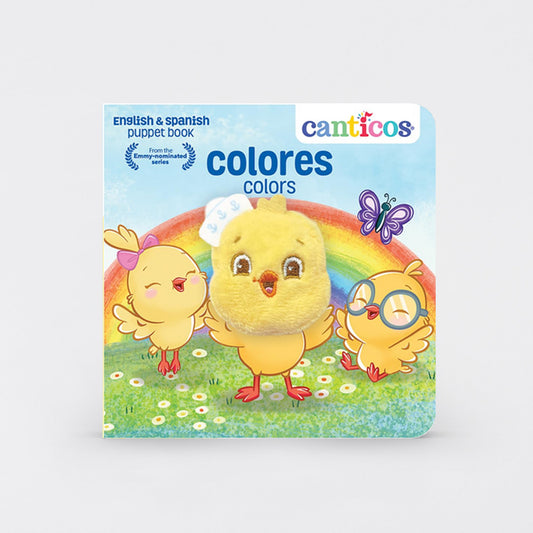
I had to learn a second language when I first came to this country at 17. I remember how hard it was at first and how many times I wanted to give up. What helped me and what we use in the classroom all the time is tons of visuals. Books are so important, and every kid loves books, which are like a little movie they are able to play in their head every time you read to them. Parents can do this too regardless of their level of Spanish. We also use colorful picture cards with the vocabulary we want to introduce, and songs, because music is such an important tool when you are learning something new (everything is more fun and attractive with music!). My favorite thing to do with my students is to put on a little show of their favorite story using puppets, and little by little they memorize the whole book. I love to see them do that.
WHAT ARE SOME TECHNIQUES YOU USE WHEN YOU ENCOUNTER STUDENTS WHO DON'T WANT TO SPEAK SPANISH? HOW DO YOU MOTIVATE THEM?
First, I want to identify why the child doesn't like to speak Spanish. Is it the pronunciation? Is it because it is new and they don't understand it? If pronunciation is the problem, then we can introduce the vowels through songs and little by little some of the consonants. Then, we can work on the words that are difficult in a fun way. For example, let's say a child is having a hard time saying MOCHILA. In that case, I would separate the word MO CHI LA, and practice it one syllable at a time. Celebrate each syllable and let the the student know they are doing a great job. Who doesn't like to be recognized for their effort?
WHAT TYPE OF ACTIVITIES CAN FAMILIES DO AT HOME TO REINFORCE SPANISH WITH THEIR KIDS?
Books are always number one, but it also helps to use music. Learn the vocabulary of simple items at home. Refer to parts of the house in Spanish instead of English (it is OK to use Post-It notes to help parents remember too!). The best approach is to use Spanish as part of the daily routine. Instead of "time to brush our teeth" use "hora de lavarse los dientes." Dinner time becomes "a cenar” and remember consistency, consistency, consistency. In this way, a family bridges the child’s school experience with experiences at home, reinforcing that the family sees speaking in Spanish as a family value, not just something that is expected of the child. Helping your child become bilingual is an invaluable gift. You are helping your child gain confidence in their ability to have the perspective of a multitasker, to have better life opportunities, and you are opening the door to cultural flexibility and understanding. Plus, there’s always the fact that it gets easier for your child to learn a 3rd language in the future!
It is not easy but it is so worth it!
Jheymy Rivera is the Lead Teacher at ¡HolaKids! Spanish Immersion Preschool at the Corte Madera campus in Marin, California. She started her teaching career at ¡HolaKids! over six years ago and is raising two bilingual children, Emilia, 18 months, and Santiago, 3.5 years old.